Importance of Water Features in Garden Design
Incorporating water features in garden design – Incorporating water features into garden design is not merely a decorative choice; it adds depth, tranquility, and character to any outdoor space. The soothing sounds of water and the aesthetic charm it brings can transform ordinary gardens into captivating retreats.Water features play a pivotal role in enhancing the visual appeal of gardens. They create focal points that draw the eye and provide a serene atmosphere that encourages relaxation.
Moreover, the presence of water can have significant ecological benefits, supporting local wildlife and fostering biodiversity among plants. Lastly, well-designed water features can boost property values and attract potential buyers, making them a worthwhile investment.
Aesthetic Value of Water Features
Water features elevate the overall design of gardens by providing a dynamic element that contrasts beautifully with the greenery. Their reflective surfaces can create stunning visual effects, mirroring surrounding plants and sky.
Ecological Benefits
Integrating water features into gardens encourages wildlife visitation, including birds, butterflies, and beneficial insects. These features help maintain local ecosystems by providing habitats and drinking sources, essential for various plant species.
Improving Property Value
Properties with well-crafted water features often see an increase in market value. Prospective homeowners are drawn to gardens that showcase unique and thoughtfully designed outdoor spaces, making water features an attractive selling point.
Types of Water Features: Incorporating Water Features In Garden Design
Garden designers have a plethora of options when it comes to water features. Each type offers unique aesthetics and functions, allowing for customization according to individual garden themes.
- Ponds: These can be designed for fish, aquatic plants, or as a reflective pool.
- Fountains: Available in various styles, fountains can add a focal point and soothing sound.
- Waterfalls: These can create a natural look and enhance the ambient sound of flowing water.
- Streams: Flowing water can simulate a natural habitat and provide movement in the garden.
- Birdbaths: Simple and effective, birdbaths attract local birds and enhance garden biodiversity.
Styles of Water Features
Water features come in styles that align with various garden themes. Some common types include:
- Naturalistic: Mimics natural elements with irregular shapes and native plants.
- Formal: Features clean lines and geometric shapes, often incorporating symmetry.
- Tropical: Includes vibrant colored water lilies and large-leaved plants, emphasizing a lush look.
- Zen: Characterized by simplicity, these often include minimalist ponds or bamboo water spouts.
Naturalistic vs. Formal Designs
Naturalistic designs use organic shapes and integrate water features seamlessly into the landscape, whereas formal designs rely on structured layouts. Both serve different aesthetic goals and can be chosen based on personal preference and garden themes.
Planning and Placement of Water Features
Selecting the right location for a water feature is critical to its success. Specific considerations must be taken into account to ensure harmony with existing landscaping.
Key Considerations for Location, Incorporating water features in garden design
When placing a water feature, consider factors such as sunlight exposure, visibility from key viewpoints, and proximity to electrical sources for pumps or lighting.
Integrating with Landscaping
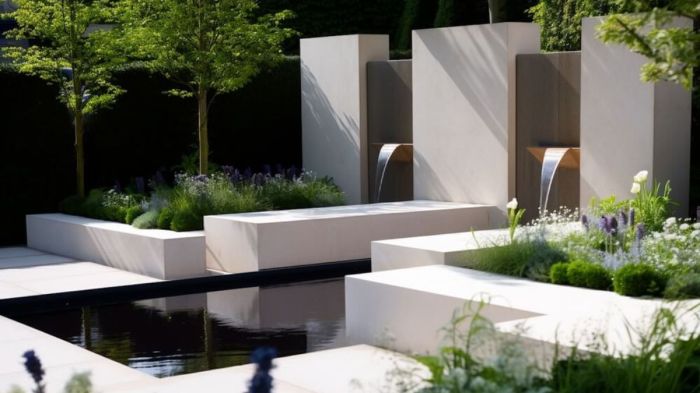
Water features should complement existing plants and structures. Techniques include surrounding them with native plants or using rocks and stones that match the garden’s overall aesthetic.
Measurement and Planning Guide
To install a water feature, follow these steps:
- Choose the type of water feature that suits your needs.
- Measure the intended space to determine the appropriate size.
- Mark the area with stakes or rope to visualize placement.
- Consider the depth if it involves a pond or a stream.
- Plan for plumbing and electrical needs if applicable.
Maintenance of Water Features
Regular maintenance is essential for keeping water features in optimal condition. Each type of feature has unique tasks that must be performed to ensure functionality and aesthetic appeal.
Essential Maintenance Tasks
Basic maintenance includes cleaning, checking water levels, and ensuring pumps function correctly. Here are some specific tasks based on feature type:
- Ponds: Regularly remove debris and check water quality.
- Fountains: Clean the fountain basin and ensure no clogs in the pump.
- Waterfalls: Inspect and clear any blockages in the water channel.
Common Issues and Solutions
Common problems with water features include algae growth, leaks, and pump failures. Here’s how to address them:
- Algae: Use aquatic plants to shade the water or introduce fish that eat algae.
- Leaks: Regularly check seals and connections; repair as necessary.
- Pump Failures: Clean filters and check for blockages.
Seasonal Maintenance Checklist
Maintaining water features requires different tasks throughout the seasons. For instance:
- Spring: Check water levels and clear debris.
- Summer: Monitor for algae and ensure adequate water flow.
- Fall: Remove fallen leaves and prepare for winter.
- Winter: Winterize by draining or covering features to prevent freeze damage.
Integrating Water Features with Garden Themes
Water features should reflect the overall design of the garden. Specific themes can benefit from tailored water feature designs.
Incorporating Water Features into Specific Styles
For instance, in a Japanese garden, a koi pond may be suitable, while a modern garden might benefit from a sleek, minimalist fountain.
Matching Designs with Surroundings
Ensure that water features harmonize with plants and hardscapes. Using complementary materials enhances visual coherence across the garden.
Using Lighting to Enhance Water Features
Strategically placed lighting can highlight the beauty of water features at night, adding to the ambiance. Soft illumination creates a magical effect while ensuring safety around water areas.
Environmental Considerations
Sustainable practices are vital when incorporating water features. They can conserve resources while enhancing biodiversity.
Sustainable Practices
Utilize rainwater collection systems to feed water features, reducing reliance on municipal water supply.
Importance of Native Plants
Surrounding water features with native plants promotes biodiversity and creates a balanced ecosystem, attracting local wildlife.
Eco-Friendly Materials
Consider using natural stones, recycled materials, and non-toxic liners when constructing water features to minimize environmental impact.
Creating a Focal Point with Water Features
Water features can serve as stunning focal points, drawing attention and enhancing garden layouts.
Designing a Centerpiece
Plan the layout so that the water feature is the central element, surrounded by complementary plants and seating areas for optimal viewing.
Enhancing Focal Points with Surrounding Elements
Incorporate pathways, benches, and sculptures to create a cohesive design that highlights the water feature as the main attraction.
The Role of Sound and Movement
The gentle sounds of flowing water and its dynamic movement capture attention and create a serene atmosphere. This sensory experience enhances the allure of the garden, encouraging visitors to engage with the space.